The CV full form is Curriculum Vitae, a Latin phrase that means "course of life". A CV is a detailed record of your education, work, research and achievements. In India, most recruiters use CV and resume for the same thing: a one- or two-page document that gets you shortlisted for a job.
The difference starts to matter when you apply for a research post, a PhD, a teaching job or a job abroad, or when a form asks for a biodata. Below you will find what each document is, which one a recruiter or form is really asking for, what to put in it, and how to check that hiring software can read it before a person does.
CV full form and meaning
CV stands for Curriculum Vitae. Curriculum means a course or a run, and vitae means of life, so the phrase reads as "the course of your life". The plural is curricula vitae, though nearly everyone just says CVs. Some American universities shorten it further to vita.
Resume, written résumé in French, comes from the French word for summary. That one difference in meaning explains most of what follows. A CV records everything you have done in your academic and professional life. A resume summarises only what matters for the job in front of you.
CV vs resume: the real difference
Outside India, the two are separate documents with separate rules. The table sets them side by side.
| Point | CV (curriculum vitae) | Resume |
|---|---|---|
| Meaning | Course of life | Summary |
| Length | No fixed limit; grows with your career | One page for freshers, two at most for experienced people |
| Purpose | A full record of your academic and professional work | A short case for one specific job |
| Typical sections | Education with thesis titles, research, publications, conferences, teaching, grants, awards, memberships, references | Contact, summary, experience, projects, education, skills |
| Order | Usually by category, oldest detail kept | Most relevant and most recent first |
| Tailoring | Updated as you go, rarely rewritten per application | Edited for every job you apply to |
| Who asks for it | Universities, research institutes, PhD and fellowship programmes, faculty posts | Companies, campus placements, internships |
The University of North Carolina's Writing Center guide to CVs and resumes draws the same line: a resume is usually no more than a page, while a CV has no set length and keeps growing as a researcher publishes and teaches.
Which one do Indian employers mean?
In Indian private-sector hiring, "CV" and "resume" mean the same short document. When an HR executive at a bank, an IT company or a startup says "send your CV", they want a one- or two-page resume, not a full academic record. Sending six pages to that request does not look thorough. It looks like you did not know what they wanted.
Private company jobs, campus placements and internships: a one-page resume if you are a fresher, two pages at most once you have several years of experience.
Research fellow, project assistant, PhD, postdoc or faculty posts: a full academic CV with your publications, conferences and teaching.
Jobs abroad: in the UK and much of Europe, CV usually means a short job document much like an Indian resume. In the US and Canada, a CV is the long academic record and companies want a resume. Read the job post and match its word.
Government and PSU recruitment: the form or notification usually prints its own format. Fill in that format and attach only what it asks for.
If you are unsure, ask the recruiter one question: "Would you like a one-page resume or a detailed CV?" Nobody minds that question, and it saves you from sending the wrong document.
Biodata vs CV vs resume
Biodata, short for biographical data, is an older Indian format that puts personal details first: date of birth, gender, religion, marital status, father's name, full address, languages and often a photo. Families still use it for marriage proposals, and some government and PSU forms ask for similar details in their own printed format.
| Point | Biodata | Resume | CV |
|---|---|---|---|
| Leads with | Personal details | Your strongest relevant work | Education and research |
| Personal details (DOB, religion, marital status) | Included | Left out | Left out |
| Photo | Usually included | Only if the employer asks | Rarely |
| Length | One to two pages | One to two pages | As long as your record needs |
| Used for | Marriage proposals, some government forms | Private jobs, placements, internships | Academic and research roles |
For private jobs, leave the biodata details out of your resume. Age, religion, marital status and father's name take up space a recruiter would rather spend on your skills, and they invite judgements that have nothing to do with the job. The same goes for a "Declaration" paragraph at the bottom: it adds nothing a recruiter checks.
What goes in a resume for freshers and job switchers
Keep one column, plain section names and this order. Recruiters scan in seconds, and screening software looks for these headings.
Contact: name, a +91 mobile number, a professional email, your LinkedIn address written out in full, and your city. No full home address.
Summary: two lines on who you are and the role you want, written for this job.
Experience or internships: role, company, city and month-year dates, then three to five bullets that start with a verb and show a number where you have one.
Projects: especially for freshers. Name the project, what you did and what came out of it.
Education: degree, college, university and year. Add your CGPA and the percentage if the employer asks for one; our CGPA to percentage calculator uses your university's own rule.
Skills: the tools and skills you can actually use, named the way job posts name them (Tally Prime, Power BI, SQL, Excel pivot tables).
Certifications and positions of responsibility: short lines, with the year.
Save it as a PDF from Word or Google Docs, and name the file with your name, for example Ananya_Sharma_Resume.pdf. A file called CV_final_new2.pdf gets lost in a recruiter's downloads folder. For the full walkthrough, with summary examples, a bullet formula and a one-page fresher sample, see our step-by-step guide on how to make a resume.
What goes in an academic CV
An academic CV is judged on depth, not brevity. Use clear headings and keep everything in reverse date order within each heading.
Research interests: three or four lines on your area.
Education: every degree with the institution, year and, for postgraduate degrees, your thesis or dissertation title and guide.
Publications: journal papers, book chapters and conference papers in one citation style, with your name in bold.
Conferences and presentations: title, event, place and year.
Teaching and research experience: courses taught, labs handled, projects and funding agencies.
Fellowships, grants and awards: with the year and the awarding body.
Technical and lab skills, memberships and references: two or three referees who know your research.
If you are applying for a doctorate, our guide to PhD admission in India explains where the CV fits alongside the entrance test, the interview and the research proposal.
Turning a long CV into a one-page resume
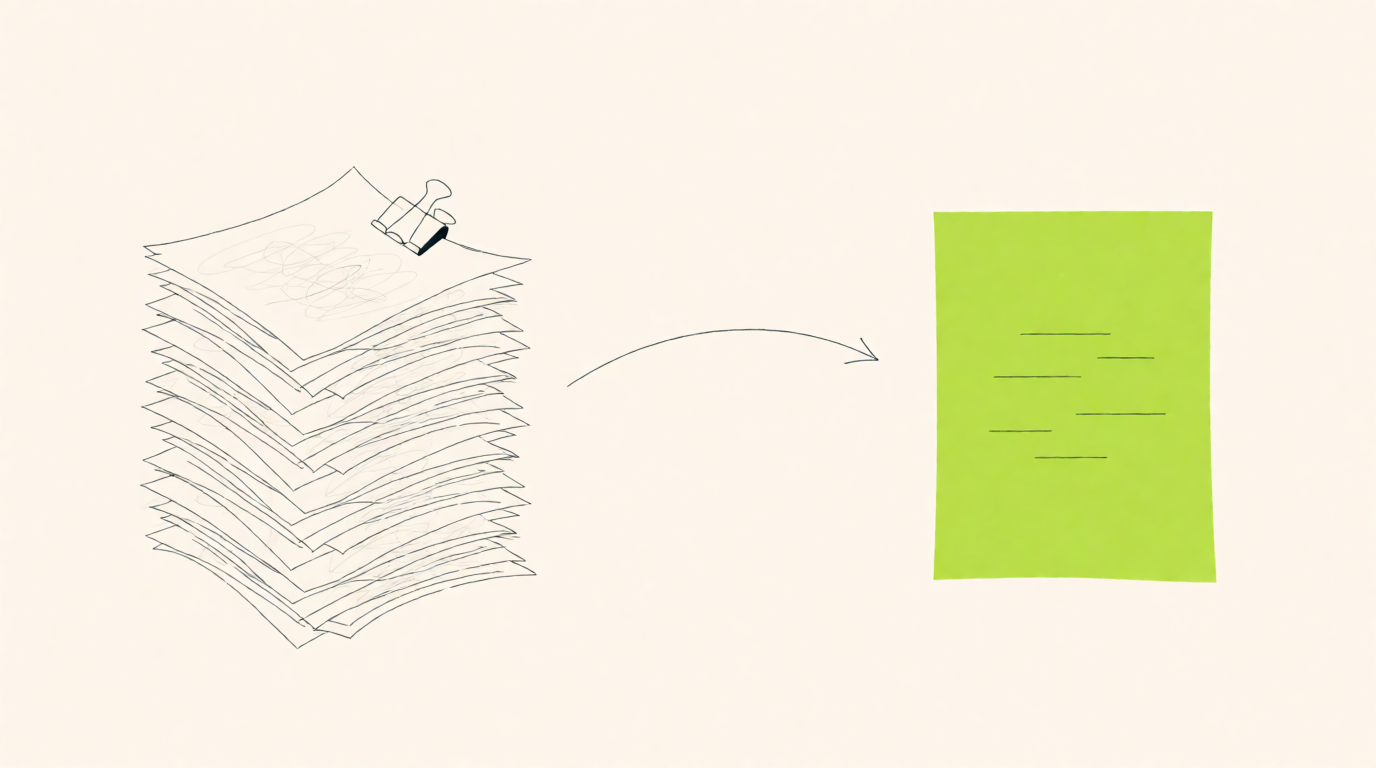
Many postgraduates and researchers moving into industry have the opposite problem: a four-page CV and a company asking for one page. Cut it in this order and you will usually get there.
Start from the job post. Mark the five or six skills it asks for most, and keep only the work that shows them.
Replace the publication list with one line, such as "Four peer-reviewed papers on solar cell materials", and keep only the one most relevant to the job.
Turn research projects into experience bullets that say what you built, measured or improved, with numbers where you have them.
Drop conference listings, referees and coursework. Keep awards only if they are competitive and recent.
Add a two-line summary at the top that names the role you want, not your thesis topic.
Keep the full CV saved as its own file. You will need it again for academic applications, and it is easier to cut a fresh resume from a complete record than to rebuild one from memory.
How to check your CV before you send it
Many companies and job portals run applications through an applicant tracking system (ATS) before a person reads them. The software pulls the text out of your file and sorts it into fields such as name, phone, experience and skills. Two-column designs, text inside images, icon fonts and details tucked into a page header can come out scrambled or not at all. Your CV can look perfect on screen and still read as a jumble to the software.
Run it through our free ATS resume checker before you apply. It reads your PDF or Word file in your own browser, shows you the text the way a parser reads it, scores the parts that matter, and, if you paste the job description, lists the skills from the post that your CV does not show yet. Fix what it flags, export again and check once more.
Keep your job titles and dates the same across your resume and your documents. Background checks compare them with your experience letters, and a mismatch of a few months raises questions you will have to answer.
Common CV mistakes Indian recruiters notice
Sending a long academic CV for a private-sector job, or a one-page resume for a research post.
Using the same CV for every application instead of matching the summary and skills to each job post.
Adding date of birth, religion, marital status, father's name or a photo when nobody asked for them.
Listing duties ("responsible for filing documents") instead of what you did and what changed.
A two-column template from a design site that screening software reads in the wrong order.
Ending with a Declaration and a signature line, which takes space and adds nothing.
If you are about to start work, our honest piece on what your first job will teach you is worth five minutes.
Frequently asked questions
What is the full form of CV?
CV stands for Curriculum Vitae, a Latin phrase meaning "course of life". It is a detailed record of your education, work and achievements.
Is a CV the same as a resume in India?
For most private-sector jobs, yes. Indian recruiters use the two words for the same one- or two-page document. A full academic CV is expected only for research, PhD, fellowship and faculty applications.
How long should a CV be for a fresher?
One page. Put your education, internships, projects and skills on it, and leave out personal details such as date of birth and marital status.
Should I put a photo on my CV?
Not for Indian private-sector jobs unless the employer asks for one. Government forms usually collect a photo separately in their own format.
What is the difference between a biodata, a CV and a resume?
A biodata leads with personal details and is used for marriage proposals and some government forms. A resume is a short, job-focused summary for private jobs. A CV is a full academic and professional record for research and teaching roles.
How do I know if my CV is ATS-friendly?
Check how software reads it. Our free ATS resume checker shows the text a parser pulls from your file, flags layout problems and compares your skills with a job post.
Get personalised college recommendations based on your profile.
Compare placements, cut-offs, and fees across 400+ colleges, for free.
Explore Colleges →