Full-time management study
A two-year MBA with core subjects, internship and electives.
Key highlights at a glance
Overview stats are being updated.
Speak with a counsellor for the latest rankings, packages, and campus details.
Why FMS Delhi
Review each programme's own bulletin before applying.
A two-year MBA with core subjects, internship and electives.
Physical classes for eligible experienced professionals living in Delhi NCR.
Separate professional qualifications and healthcare experience requirements apply.
Full-time MBA 2024-26 outcomes are reported separately from executive or certificate study.
Get personalised guidance from our experts to find the best path for your goals.
FMS Delhi
FMS Delhi is the Faculty of Management Studies of the University of Delhi. Its full-time MBA costs a fraction of most top MBAs in India. The official 2026-28 bulletin says the semester fee is currently about ₹60,818 per semester, so roughly ₹2.43 lakh for four semesters, with fees open to revision by the University of Delhi. On top of that, FMS lists a Management Science Association (MSA) fee of ₹52,000 a year for full-time students. FMS has 251 sanctioned seats, admits through CAT, and its 2024-26 batch reported an average CTC of ₹32.27 lakh. All figures are as of October 2026.
FMS is a faculty of the University of Delhi, and its bulletin says fees are revised as per the university's instructions. That helps explain why the gap with other top schools is so large.
| Fee item | Amount | Notes | Source |
|---|---|---|---|
| Semester fee, MBA full time 2026-28 | About ₹60,818 per semester | Four semesters; payable at the start of the academic year; subject to revision | fms.edu, MBA 2026-28 information bulletin |
| Two-year tuition estimate | About ₹2.43 lakh | Our sum of four semesters at the published rate | Calculated from the fms.edu bulletin |
| MSA fee | ₹52,000 a year | Funds student activities; subject to revision | fms.edu, Management Science Association page |
| Application registration fee | ₹1,000 (₹350 for SC, ST, PwD) | Paid with the online FMS form | fms.edu, MBA 2026-28 information bulletin |
| Hostel | Not included | Non-Delhi full-time students can apply for University of Delhi hostels | fms.edu, MBA 2026-28 information bulletin |
Even with two years of MSA fees, your institute bill stays near ₹3.5 lakh. Your real budget driver is living in Delhi. If you do not get a university hostel, rent and food become your largest cost, so plan that early. For comparison, other public options such as the IIFT Delhi MBA and the IIMs on our IIM MBA fees page charge close to ₹20 lakh or more.
The 2026-28 bulletin lists 251 sanctioned seats for the full-time MBA, split as 101 unreserved, 69 OBC (non-creamy layer), 37 SC, 19 ST and 25 EWS. Supernumerary seats sit on top of that: 25 for foreign students, 12 for persons with disabilities, 12 for children and widows of armed forces personnel, 6 each for wards of DU teaching and non-teaching staff, and 2 under the orphan quota. Separately, the evening MBA Executive lists 200 seats for 2024-26.
The unreserved pool is only 101 seats, so competition for general seats is tight even though the class looks large on paper.
You need a bachelor's degree after 12 years of schooling with at least 50% marks for the unreserved category, 45% for OBC non-creamy layer, EWS, PwD and CW candidates, and passing marks for SC and ST. Final-year students can apply.
FMS uses CAT only. For 2026-28, it weighted CAT sections at 40% VARC, 30% DILR and 30% QA for the shortlist, and added 5 marks for women candidates. Final selection gave 50% weight to the weighted CAT score, 10% each to Class 10 and Class 12 marks, 10% to a discussion on your statement of purpose, 5% to an extempore and 15% to the personal interview. Note what is missing: work experience and graduation marks carry no direct weight, so your CAT score does most of the work. If you missed CAT, see our list of MBA colleges without CAT.
When we checked on 13 October 2026, the 2027-29 bulletin was not yet on fms.edu. Expect it to use CAT 2026, but confirm the weights when it is released.
FMS's final placement report for the 2024-26 batch gives these figures:
The same report shows a 2024 average of ₹29.2 lakh and a 2025 average of ₹30.1 lakh, so the trend has been up. CTC includes variable and one-time components, so your monthly in-hand pay will be lower. These are past results, not a promise. You can read the reports on the FMS placement reports page.
FMS fits you if you can score very high in CAT and want an MBA with a low fee and a strong placement record. More than half of the 2024-26 batch were freshers (54%), so it is open to final-year students as well as people with a few years of work. If you need to keep working, look at the evening MBA Executive instead. It needs five years of work after graduation, Delhi NCR residence and employer permission, and classes are held in person on weekday evenings and Saturdays. The executive bulletin also asks for at least 45% marks in graduation and a No Objection Certificate from your current employer. A separate MBA Executive in Health Care Administration runs on the same evening pattern for people working in healthcare. Our executive MBA guide compares these with other formats.
The trade-off at FMS is simple. You pay very little, but you compete with a very large CAT pool for 101 unreserved seats, and your housing depends on getting a University of Delhi hostel. If your CAT score is in range, the fee-to-placement ratio is hard to beat.
Confirm the current fee in the FMS MBA 2026-28 bulletin before paying. For a wider view of MBA formats and fee bands, read our MBA course guide, or talk to a counsellor about your CAT target.
Placements
From FMS's final placement report for the 2024-26 batch: 307 students, 304 in the process, 287 placed. Annual CTC is not take-home pay, and these are not executive outcomes or a promise for future batches.
₹32.27L
Average annual CTC
₹29.59L
Median annual CTC
₹45.19L
Top 100 average CTC
287
Students placed
Fees & scholarships
The older summary amount is indicative. Current admission notices, category rules and separately published charges determine the payable invoice.
Approximate full-time MBA figure in the 2026-28 bulletin; subject to revision.
3 September 2026 first-semester notice for the three MBA programmes. Concession categories have separate amounts.
Published full-time MBA student contribution, subject to revision; separate from semester fee.
11 August 2026 notice lists ₹60.818K for second-year third-semester Executive and Healthcare Executive students; category rates differ.
Campus life
FMS Delhi is based in Delhi, Delhi. Ask counsellors what campus access your programme includes.
How to apply
Simple steps to start your journey.
Intakes
January | July
Application Time
10–15 mins
Documents Required
Academic + ID proof
Ensure you meet the basic eligibility for your chosen program.
Fill out the application form with accurate academic details.
Submit scanned copies of academic records and certificates.
Complete payment through secure online methods.
Receive confirmation by email and begin onboarding.
Learner proof
What 4 learners said about FMS Delhi.
4 reviews
Rating distribution
Explore more
Compare nearby or similar institutions before you shortlist.

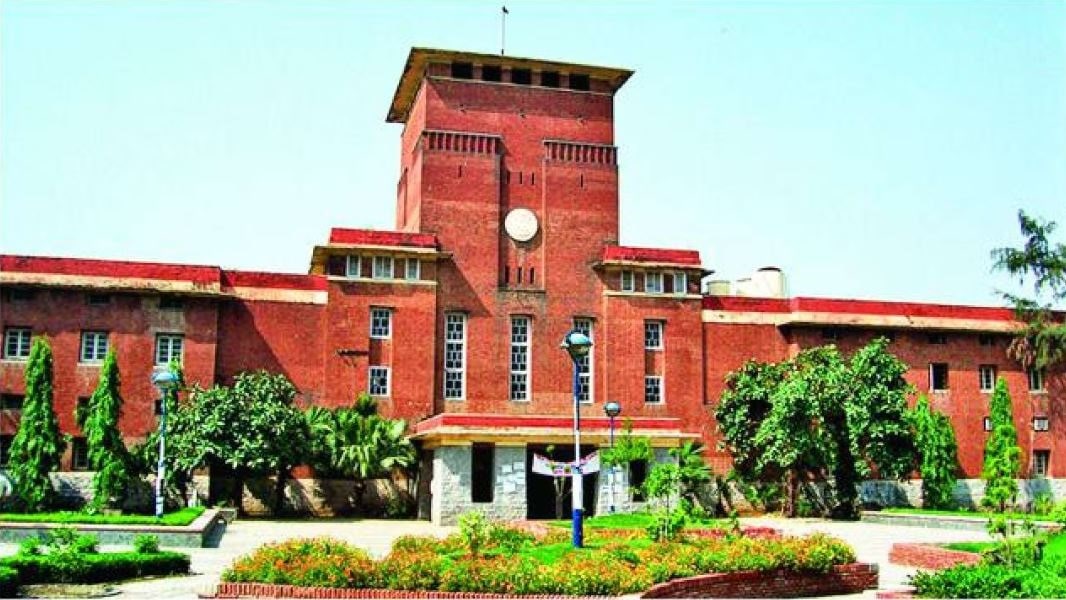




Programme eligibility, physical attendance, dated fees and full-time placement measures.
The FMS MBA 2026-28 bulletin says the semester fee is currently about ₹60,818, so roughly ₹2.43 lakh over four semesters, as of October 2026. FMS also lists an MSA fee of ₹52,000 a year for full-time students. Both can be revised. Hostel and living costs are separate, so confirm your invoice before paying.
FMS's Management Science Association page separately lists ₹52K annually for full-time MBA students, subject to revision. Include this published contribution when planning expenses. Ask for the current payable breakdown, including applicable university charges and personal living costs, before treating a headline fee as the complete budget.
The programmes reviewed are a full-time MBA and physical evening Executive and Healthcare Executive MBAs. The executive bulletin explicitly requires attendance. Online applications and university fee payment do not change that delivery mode. Verify any separate online course through its exact official announcement before enrolling.
The general MBA Executive bulletin requires at least 45% in the qualifying bachelor's degree and five years of executive or administrative experience after graduation. Delhi NCR residence and employer permission are required. Check the admission-year experience cutoff and physical class commitments before submitting an application.
Compare the evening MBA Executive with the Healthcare Executive MBA when your qualifications and experience meet their separate rules. Both require physical participation. Management development programmes cover particular professional topics; review their individual schedules, awards and admission conditions instead of assuming that every offering is a degree.
The Healthcare Executive MBA has separate professional qualification requirements, including specified medical degrees or eligible health-related postgraduate study. It also requires relevant healthcare-sector executive or administrative experience. Consult the 2026-28 bulletin for your exact degree, marks threshold, experience timing, residence and employer permission requirements.
You need a bachelor's degree after 12 years of schooling with at least 50% marks for the unreserved category, 45% for OBC non-creamy layer, EWS, PwD and CW, and passing marks for SC and ST. Final-year students can apply. FMS admits only through CAT; the 2026-28 batch used CAT 2025, followed by a statement of purpose discussion, extempore and interview.
Request the exact certificate or management development programme announcement from FMS, including its delivery format, award and written fee schedule. The reviewed general programme catalogue does not establish one universal online certification price. Do not use a full-time or executive MBA fee for a different short course.
FMS's final placement report for the 2024-26 batch gives an average CTC of ₹32.27 lakh, a median of ₹29.59 lakh and a top 100 average of ₹45.19 lakh. Of 307 students, 304 took part and 287 were placed. CTC is not take-home pay, and these figures are not a promise for future batches or the executive MBA.
The 11 August 2026 notice applies to second-year third-semester Executive and Healthcare Executive MBA students. It lists ₹60.818K for those semester fees, with separate concession-category rates. It is not a new applicant's complete programme quotation. Check your semester, category and latest official payment instructions.
The 2026-28 bulletin lists 251 sanctioned seats for the full-time MBA: 101 unreserved, 69 OBC, 37 SC, 19 ST and 25 EWS. Supernumerary seats add 25 for foreign students, 12 for PwD, 12 for CW, 6 each for wards of DU teaching and non-teaching staff and 2 under the orphan quota. The evening MBA Executive listed 200 seats for 2024-26.
No. The semester fee of about ₹60,818 does not cover accommodation. The 2026-28 bulletin says non-Delhi students of full-time programmes can apply for University of Delhi hostels, mostly on North Campus, with separate lists for men and women. If you do not get a hostel, budget for rent and food in Delhi on top of the fee.
For 2026-28, FMS shortlisted on a weighted CAT score (40% VARC, 30% DILR, 30% QA), with 5 extra marks for women. Final selection weighted CAT at 50%, Class 10 and Class 12 marks at 10% each, a statement of purpose discussion at 10%, an extempore at 5% and the interview at 15%. Work experience carries no direct weight.
Not for the full-time MBA. The 2026-28 bulletin says applicants who have not taken CAT will not be considered, and you must also fill FMS's own online form. If you missed CAT, compare other MBA routes, or, if you have five years of work and live in Delhi NCR, look at the evening MBA Executive, which has its own admission process.
Navi plus human counsellors reconcile brochures, approvals, EMI stacks and timelines before you lock a seat.
20K+ students counselled successfully